
Lately we are being asked a lot about the CDN service and its benefits for websites.
First, we will start with a clear explanation of the nature of the service, and then continue to the additional advantages it gives us, and even the disadvantages (yes, there are disadvantages too).
Content delivery network
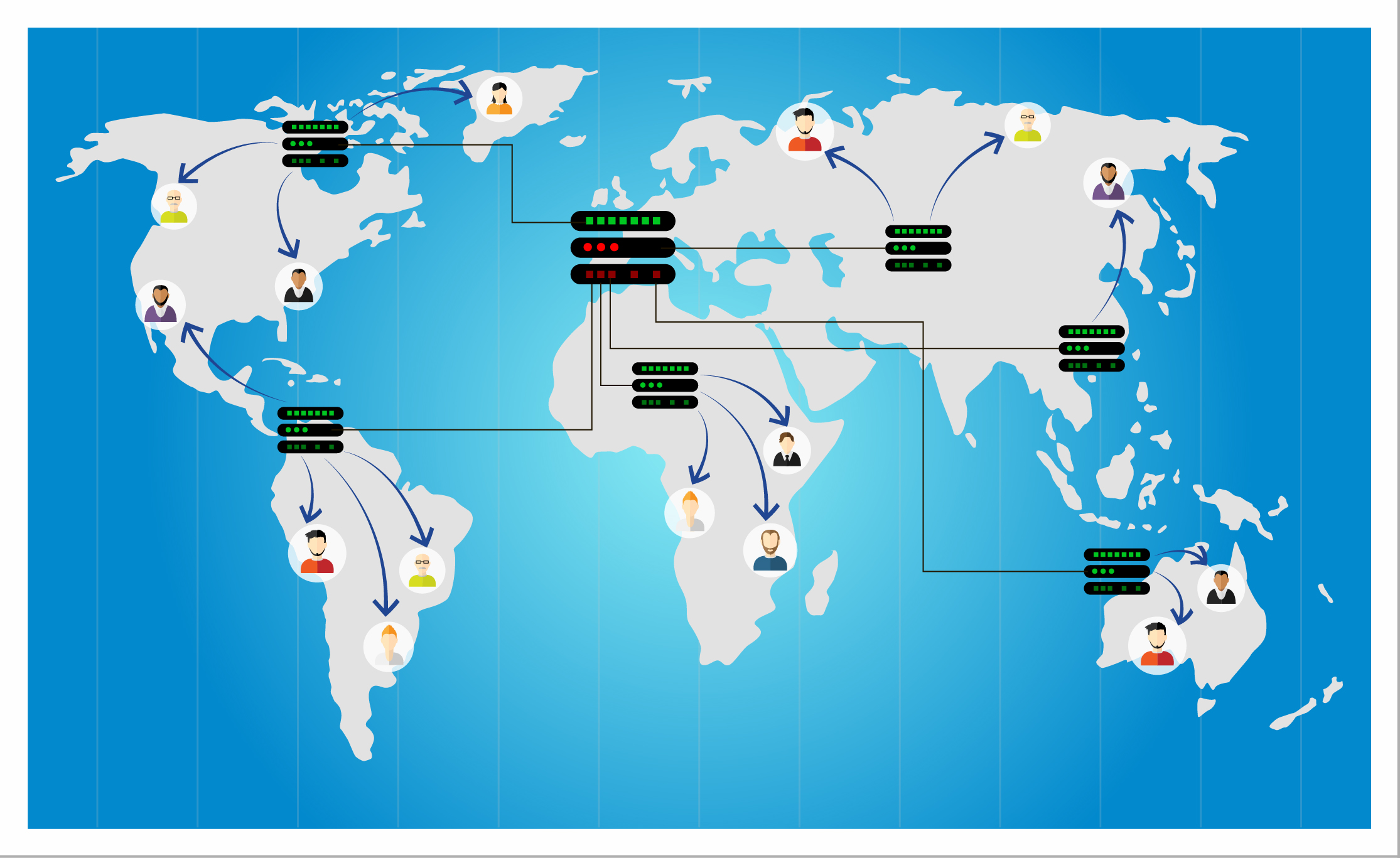
The idea behind the service is to create copies of the site's content (video, images) on many servers that share a single network between them, called a CDN – Content delivery network.
To use a CDN service, you need to route your customers through a kind of virtual transit point before they enter your site. I'll explain:
Without a CDN service (the normal situation) – a user types your site's address in the browser, is directed to the IP address handling your domain (usually your hosting company's address), and from there to your site.
with a CDN service – a user types your site's URL in the browser and is directed to the IP address of the CDN service; the CDN system performs several calculations and redirects to the IP addresses of your hosting company, and from there to your site.
The CDN system collects information about the user/visitor based on their geographic location and knows how to direct their request to one of the servers closest to them, in order to deliver the requested content (video, images) at the highest possible speed.
This is not about a whole site but about pieces of content from your site, and the service does not actually replace the hosting company.
How is this actually made possible?
The various servers in the CDN network access the site's central hosting server, pull the information from it and create a cache copy of it. This way we save a significant number of visitor requests to the central hosting server and reduce the load on it.
for example
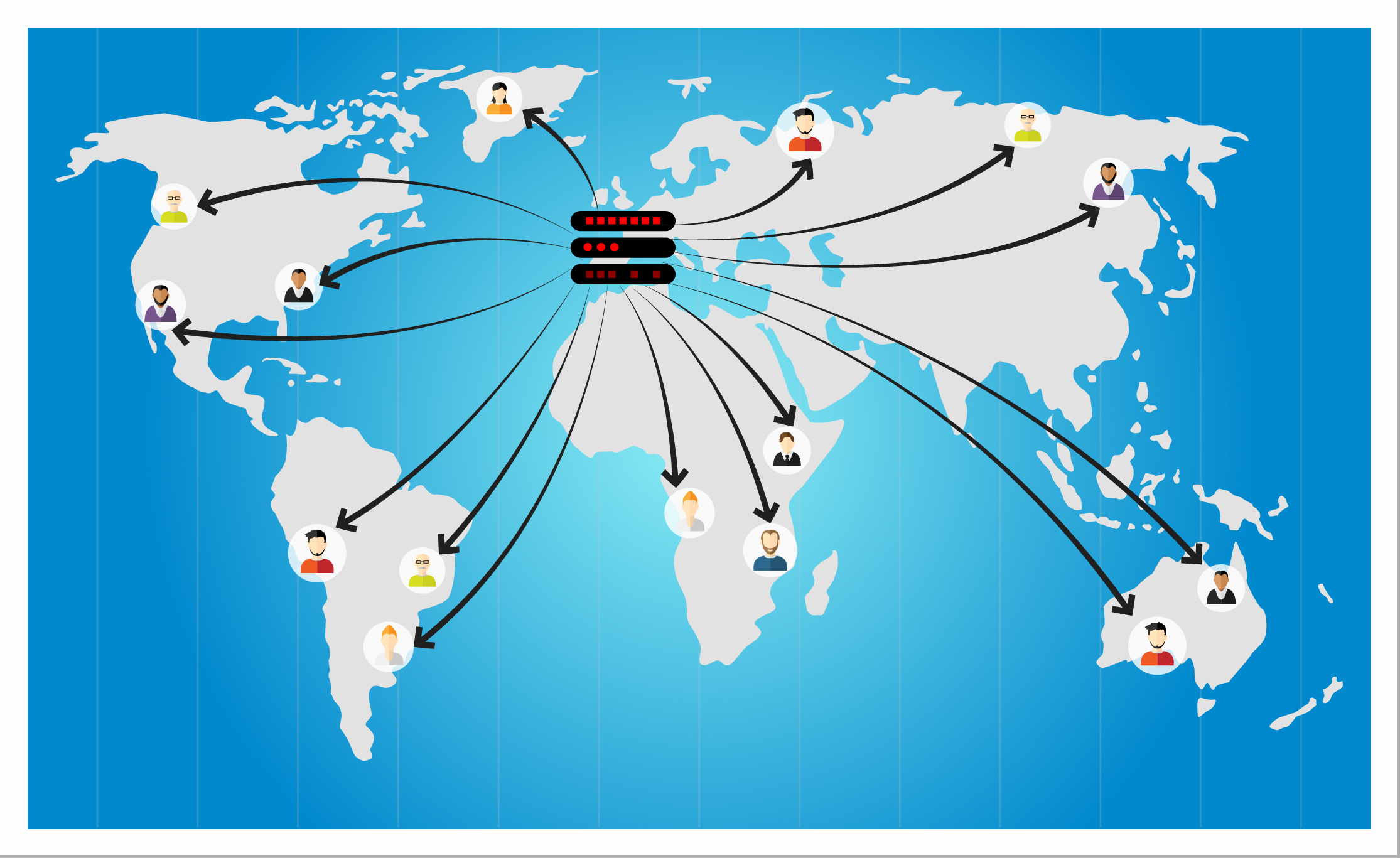
A website that wants to deliver video content to many visitors from all over the world, if it allows internet access only to its central hosting server, will be forced on the one hand to purchase a lot of hardware resources to cope with the load of requests, and on the other hand to provide expensive bandwidth so that visitors get a suitable viewing experience.
Now we will compare the 2 situations, taking into account the fact that your main hosting server is located in Israel.
- Case 1 – without a CDN service, say a visitor from Israel tries to access your site and watch a video; he gets the maximum speed because his distance from the hosting server is not far. By contrast, say a visitor from the USA tries to access your site and watch a video; he gets a much worse speed than the visitor from Israel got, because his distance from the main hosting server is much greater.
- Case 2 – including use of a CDN service, the visitor from Israel and the visitor from the USA will get a very similar viewing speed because the CDN service calculates the visitor's geographic location and serves the video from the server closest to them, and this makes it possible to improve loading speed for the user and reduce the load on the server.
It is important to note that a visitor from Israel will not necessarily get a better loading speed than if the site owner had chosen not to use a CDN service, since the CDN server closest to Israel may be located in Amsterdam, the Netherlands (for example). So you should take into account the location of your target audience and consider this important detail.
Types of CDN
There are 2 main types of CDN use, which are very different from each other, each with its own advantages and disadvantages:
- Manual CDN push – the CDN service becomes a kind of secondary hosting server, where all file uploads are made directly to the CDN server and are linked from your site directly to that server.
Some push CDN services support FTP access, while others support REST, SOAP and various protocols.
The advantage of this method is full control over the choice of files that will be moved to the CDN server, and over the choice of content that will remain on the central hosting server. - Pull CDN (origin pull) – this service differs from manual push CDN: instead of the user deciding which files will be "pushed" to the CDN server and which will remain on the central hosting server, the CDN service decides for them and "pulls" the relevant files.
Choosing the CDN type that suits you best
Most sites set the CDN service to choose its route automatically. But every site has a type of CDN that suits it, and it is important to understand this.
- Sites that make frequent content changes (for example, a surge of articles and news during the day) will work best with CDN in origin-pull mode. The content stays relatively stable and traffic is spread fairly evenly. It therefore makes sense to limit the amount of content passed to the CDN server and to set long expiration dates for files, thus allowing as many visitors as possible to receive pre-stored content (cached content) from the CDN server.
In simple words – the CDN network creates a local Cache copy and updates against the site once every few minutes. - Sites whose content does not change frequently will work better with a manual-push CDN. You can upload the content to the CDN server once and leave it there with no expiration date (permanently), without needing to renew the content at fixed intervals. A local cache copy of the site is created on the CDN server, and from that moment visitors are directed to the CDN server closest to them to receive the content.
If you're not sure which type of plan to choose, don't worry. Both types of plans will work. You'll just need more time to tune the settings in order to get the most out of the CDN service.
Advantages
- Load distribution: The first and main advantage of a CDN network lets the site administrator distribute the load of visitor requests across a number of servers and thus save network resources.
- Improved user experience: due to the decentralization, the visitor receives the content optimally and with maximum use of their bandwidth.
- International branches: When browsing from different places around the world, the site can be accessed with no change in load time, which is made possible by a geographic location close to the visitor.
- Spot resilience: This is not a magic solution, but in the event of a temporary outage of one of the servers in the CDN network, or even the main server, visitors are redirected to the site through another server in the network that will respond.
- Security: We all know what DDoS attacks are – attacks based on overloading a server with a large number of requests, causing it to crash. Using a quality CDN network can prevent the crash and create an additional security layer between the attackers and our server. The many requests reach the CDN network and do not reach the central hosting server.
Disadvantages
- Costs: A quality CDN service costs money. But on high-traffic sites, it is fair to say the costs will be minimal compared to buying a hosting package with better specs.
- Caching: Displaying the site from the cache is not always up to date, which may sometimes cause display problems.
- Page loading speed: If your target audience is from only one country, it may be worth comparing page load speeds before and after.
- SEO: Your site's URL will redirect to the IP address (not an Israeli one) of the CDN service. Several SEO professionals recommend using a local address and insist on hosting in Israel in order to get priority in search engine rankings.
In summary
It can be seen that a CDN is much more than just a network for load distribution; its benefits affect aspects of user experience, security and resilience.
The combination of cost-effective pricing and these improvements creates a solution that cannot be ignored in the cloud era.
But it is important to choose a suitable and expert provider when joining a CDN network, one that can provide optimal service both in Israel and globally.
