
The 100 categories that are growing and fading worldwide eCommerce during the coronavirus period
Like the old physical world familiar to all of us, the eCommerce world has also gone through A dramatic shake-up due to the coronavirus.
Governments around the world are taking various steps to stop the spread of the virus by locking down each and every one of us, and closing the public space.
Inevitably, these steps lead to the complete destruction of the economy of the "old world".
The enormous economic change taking place is reflected in the world of eCommerce.
In almost every country hit by the virus, the instructions are to stay at home and to minimize contact as much as possible, and businesses not defined as "essential" are being closed as quickly as possible. And the truth? These changes affect in a fascinating way not only our daily lives, but the shopping habits of all of us. We are not only seeing a significant rise in online shopping, which is easy to understand, but a significant rise in the volume of purchases, and more interestingly, we are also seeing changes in their shopping habits.
While we expect that during a pandemic consumers will buy large quantities of toilet paper, canned goods and other essential products, it seems consumers are choosing to buy several other types of products as well.
This interesting change may perhaps give us a glimpse of the day after the crisis, too, We are certain that the changes in habits that consumers are showing these days will stay with us the day after, too, and even intensify.
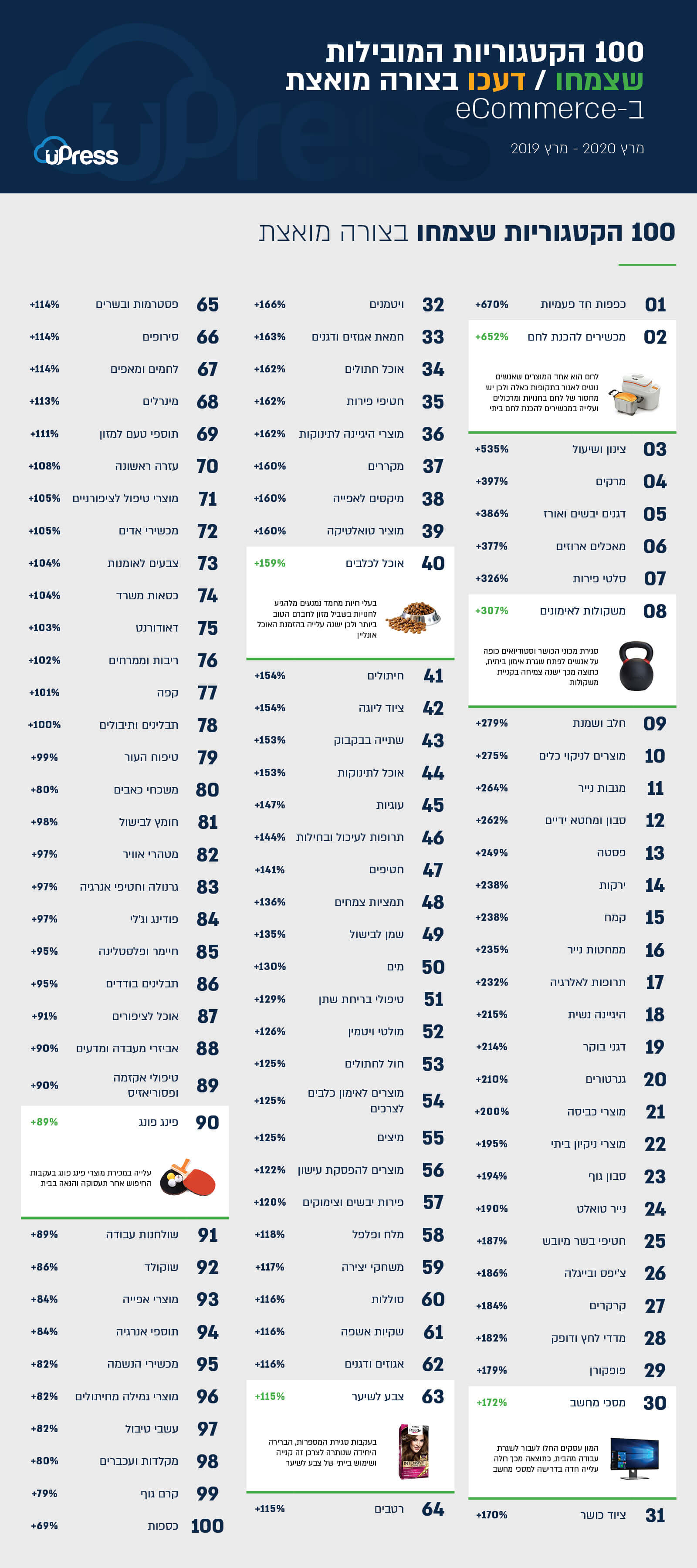
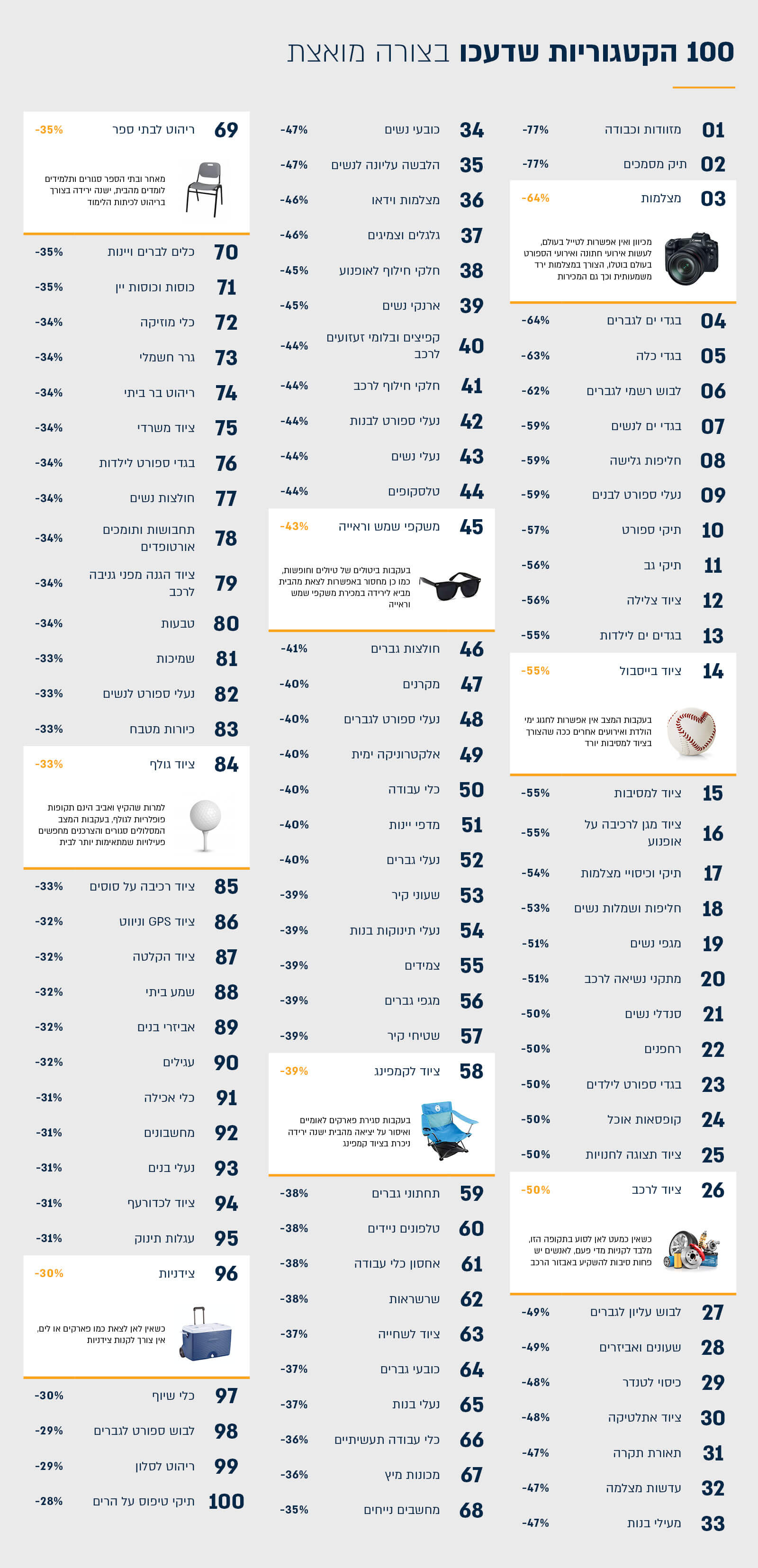
To check how this period affects our shopping habits and what we are consuming these days, we conducted a review of eCommerce sales across the USA and produced a list of the 100 fastest-growing categories in the field and the 100 fastest-declining categories in the field, and all this in a test done for the month of March, which in most of the world was the initial "peak" of the changes caused by the virus.
Here are the main points:
• There is a sharp increase in everything related to home fitness that includes equipment such as weights, fitness accessories and yoga equipment. This is because gyms, yoga studios and aerobics venues were forced to close and will probably be among the last to reopen.
Since we are seeing a rise in home fitness, there is a noticeable decline in purchases of fitness equipment that requires leaving the house, such as gym bags, balls of all kinds and equipment adapted to non-home activity.
• Since many companies have moved to a working from home, are seeing growth in demand for computer equipment such as monitors, keyboards, mice, webcams (Did you know that Israel's stock of webcams has almost completely run out?) And likewise, more comfortable chairs, since many people are looking to create a professional and comfortable work environment – at home.
• Following The collapse of the tourism world During this period, a decline can be seen In the field of luggage, bags and cameras. In addition, because there are fewer options for trips, we can see Decline in open footwear such as sandals and also the swimming field has experienced a very significant hit with products such as Swimwear and flip-flops.
• Another field that suffered in this period is formal and elegant attire, following cancellations of events such as weddings there is no demand for suits and dresses, mainly Groom suits and wedding dresses.
In Israel too, this is clearly expressed, for example in the Holiday dress-up, people neither stay as guests nor host, and feel no need to buy holiday clothing.
In the period of uncertainty we are in, consumers' buying habits have shifted to consumption better suited to staying home with the family, to everything related to keeping the daily routine as similar as possible to what it was before.
Here is the full list of growing and declining fields. If you have questions or comments about the article, you are always welcome to comment on this post; we would love to hear your opinion.
Thanks to the Stackline site for helping with data collection. Stackline for their help in collecting the data.